When Life Feels Like a Test: What We Can Learn From God in the Wilderness
“Love the Lord your God with all your heart and with all your soul and with all your strength.”
— Deuteronomy 6:5
If you’ve ever felt like your life is one long test, you’re not alone. Most of us wake up every day and feel like we’re being measured against impossible standards—Did I do enough for my kids today? Am I holding my marriage together? Does my faith look strong enough? Am I ready to take on this new leadership role?
But here’s the thing: God’s idea of a “test” isn’t the same as our culture’s version. In the West, we hear the word test and immediately think pass or fail. We imagine a red pen, a grade at the top of the paper, and shame if we don’t measure up.
But in Jewish culture, a test wasn’t about proving your worth. It was about revealing something. A test asks questions:
What can I learn from this situation?
What is God teaching me here?
What character am I
Can I trust Him when I don’t understand?
Am I willing to keep following, even when I can’t see the outcome?
Tests referred to a significant challenge or trial that tested a person's faith, commitment, and character.
That’s the heart of it. God isn’t throwing trials at us to crus us. However, our trials and challenges do serve as “tests” that meant to shape us. To show us where we can lean more deeply on Him, and to remind us that where we fall short, the Holy Spirit fills in the gaps. This does take a certain perspective shift.
Today, let’s look at the three “tests” we see summed up in the greatest commandment: the test of the heart, the soul, and the strength. And let’s see what they mean for you—in your anxiety, in your marriage, in your parenting, and in your walk with Christ.
The lesson here is to go from resistance to acceptance. Instead of feeling shame for when things get hard or the wheels are falling off, having a perspective shift that encourages us to accept our current situation. (*Please note this is not referring to unsafe or unhealthy relationships and/or contexts. If that is your situation, please reach out to a qualified health professional for help or call 911.)
When we resist what is happening, we are applying beliefs or thoughts that: “This should not be happening,” “This is bad,” or “I shouldn’t be feeling this way.” This resistance makes it bigger, more powerful, and ultimately harder to release.
But when we accept the present moment for what it is, we allow the experience to run its course. We open ourselves up to see a bigger picture beyond the immediate challenge. And from there, we can ultimately move past it: learning from it, letting it go, and ultimately, trusting God to work out and through parts we don’t have control over. Find out what I mean.
1. The Test of the Heart – Willingness or Hardness?
When the Bible talks about the “heart,” it doesn’t just mean emotions. It means the core of who we are—our will, our openness, our posture toward God.
In Exodus 17, the Israelites had just been delivered from Egypt. They’d seen the Red Sea part, manna fall from heaven, and water spring from a rock. But when thirst hit them again, their hearts grew hard. They quarreled with Moses and questioned if God was really with them.
Their “test” was simple: would they keep their hearts soft toward God, or would they harden them with bitterness, fear, and unbelief?
And here’s where it connects with us:
The heart test shows up when the laundry piles up, the kids melt down, and your chest tightens with anxiety. Will you harden your heart with resentment (“I can’t do this, I’m failing”) or will you whisper a prayer that keeps your heart open to God’s presence?
The heart test shows up in marriage when you feel emotionally distant, when communication feels strained. Will you harden your hearts against one another with defensiveness and withdrawal, or will you choose softness and willingness to try again?
A hard heart builds walls. A willing heart builds intimacy—with God and with others.
Reflection Questions for the Heart
Where am I tempted to harden my heart right now?
How can I choose softness and openness toward God in this season?
What would it look like to say, “I don’t understand, but I’m willing to stay open”?
2. The Test of the Soul – Our Whole Being
The soul in Hebrew thought isn’t just the “spiritual” part of us. The soul is our emotions, intellect, body, emotions, thoughts, feelings, consciousness, and spirit.
Psalm 78 describes Israel’s repeated tests of faith when it came to their soul (whole self): “They forgot His works and the wonders that He had shown them… They tested God in their heart by demanding the food they craved.” (vv. 11, 18) Their souls weren’t anchored. They forgot who God was, and so their whole selves drifted.
For us, the soul test asks: Does God have you? Or does God only have you when he meets your needs and requests?
This means bringing your messy thoughts, your late-night tears, your anxious spirals. Loving God with your soul means praying with your whole being: “God, here’s my exhaustion, my emotions, my thoughts. I give them to You.”
In marriage, it means inviting God into your marriage not just during prayer before dinner, but in the moments when you’re arguing about money or feeling disconnected. It means offering Him not just your “spiritual life,” but the everyday details of parenting, paying bills, and carrying the weight of responsibility together.
This test reminds us: God doesn’t just want the polished parts of you. He wants the real you—the whole you.
Reflection Questions for the Soul
Which parts of my sould or whole self am I tempted to keep from God?
How would it look to bring my emotions, my body, and my thoughts honestly before Him?
What’s one way I can anchor my soul in God’s faithfulness this week?
3. The Test of Strength – Through the Valley
Strength (or might) doesn’t just mean muscle. It means perseverance, effort, the willingness to keep going when life feels like a valley, a void, or even a bottomless dark hole.
This is the test where we say: “I don’t know the outcome, but I’ll give my best effort with all my strength and trust You, Lord.”
It’s the hardest test because it demands faith without sight. Strength says:
I will keep loving even when I feel unloved.
I will keep showing up even when I don’t see results.
I will keep trusting even when I don’t have answers.
I continue to hold a boundary because consistency or limit setting is the most loving thing I can do right now.
This might look like a test of might to commit to consistent routines, self-care habits, and other goals. This might look like practicing to strengthen your window of tolerance around frustration, overstimulation, and irritability.
In marriage, it might mean fighting for your marriage when it feels dry—believing that God can still breathe life where you see only dead bones.
And here’s the good news: the test of strength isn’t about how much you can carry on your own or power through until you're burnt out. It’s about trusting the Holy Spirit to step in when you’ve given your all and can’t go further.
If you are currently in a valley season, I encourage you to check out Prosper In Motherhood when I share my own personal valleys in the early motherhood years.
Reflection Questions for Strength
Where do I feel like I’ve reached the end of my strength?
What does it look like to keep giving my best effort, while trusting God with the outcome?
How can I invite the Holy Spirit to fill in the gaps where I fall short?
What These Tests Teach Us
So what do we take away from these three tests?
The heart test reminds us to stay soft and willing instead of bitter and hard.
The soul test reminds us to bring our whole selves, to ask “Do I believe God has me? Or does he only have me when I feel like he is meeting my needs?”
The strength test reminds us to keep walking with God through the unknown, the tunnel that has no light yet, trusting His Spirit to carry us where our strength ends.
But perhaps most importantly, these tests show us that God is not sitting with a red pen waiting to grade us. He’s a loving Father, inviting us to grow, to trust, and to know Him more deeply. His banner over us is love! Banners stand tall. A flag’s purpose in Jewish culture was so that the flag or banner could be sighted from far off, knowing what city they were coming up on, who they identified as, long before you could see the city walls. Jesus’ banner over you is LOVE (Exodus 17:15)!!!
When You Feel Like You’re Failing
Maybe you read this and think, But I’ve already failed the test. My heart is hard. My soul feels scattered. My strength is gone.
Take a deep breath. Remember: God’s tests aren’t pass/fail. They are invitations. Opportunities to learn. Chances to discover His grace in the middle of your weakness.
Where you see failure, God sees formation. Where you see gaps, the Holy Spirit is ready to fill.
Important Takeaways
You’re not failing just because your heart feels heavy. Softness isn’t about never struggling; it’s about staying willing to let God in. Let Him meet you right in your anxiety.
Your marriage isn’t doomed just because it’s hard right now. Strength is proven in valleys. Let this test be a place where your hearts grow softer toward each other and toward God.
Final Word
The three “tests”—heart, soul, and strength, aren’t about proving ourselves. They’re about learning what it means to love God fully, and trusting Him to be faithful even when we stumble.
When you feel pressed, ask:
What can I learn here?
What is God teaching me in this season?
Am I willing to keep trusting, even without knowing the outcome?
Because the truth is: God never leaves us in the middle of the test. He walks with us through it. And on the other side, He is shaping us into people who love Him more deeply—heart, soul, and strength.
A Prayer for the Journey
Lord, keep my heart soft. Teach me to love You with my whole soul, my thoughts, my emotions, my body, my spirit. Strengthen me to walk with You through the valleys, even when I don’t see the outcome. And where I fall short, fill in the gaps with Your Spirit. Amen.
Scripture to Anchor This Week
Exodus 17:1–7 – Israel tests God in the wilderness.
Psalm 78 – A call to remember God’s works and not harden our hearts.
Deuteronomy 6:5 – The call to love God with all our heart, soul, and strength.
Romans 8:26 – The Spirit intercedes when we are weak.
Journal Prompts
Where am I tempted to harden my heart right now? What would softness look like instead?
Which parts of my whole self (emotions, thoughts, body, spirit) do I struggle to bring before God?
What valley am I walking through right now where I need to trust God with the outcome?
Where can I see evidence that God has been faithful in past tests?
What does it look like to trust the Spirit to fill in the gaps where I fall short?
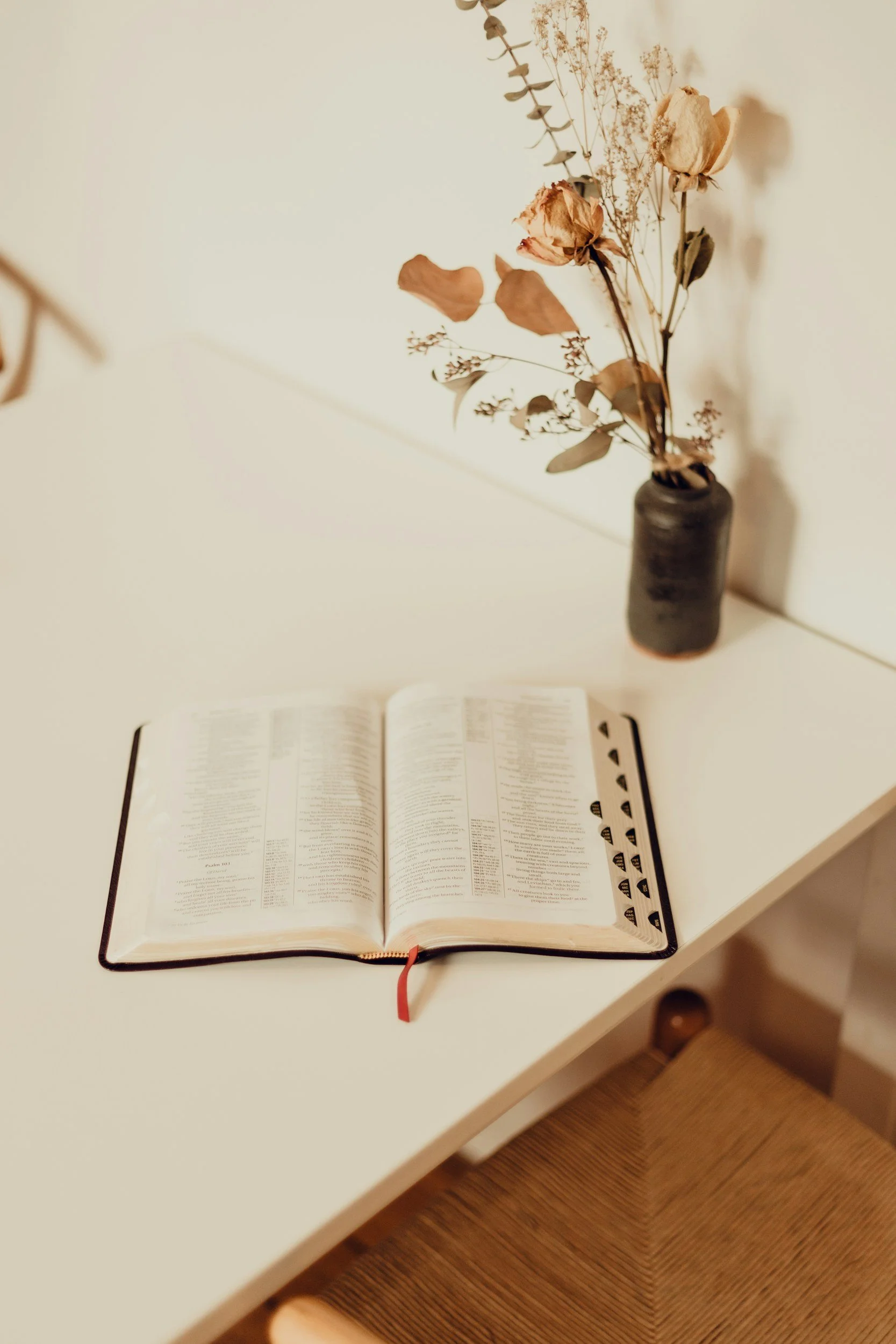
“Love the Lord your God with all your heart and with all your soul and with all your strength.”
Ready to work together?!
👇 Click below to schedule.
Prosper Counseling serves clients in Kansas and Missouri; including major metros Kansas City metro area, The Ozarks, Springfield, MO, St. Louis, MO and beyond. Coaching is available in all 50 states..
Learn more about christian counseling, women’s mental health, high functioning anxiety, or discover if you are a highly sensitive person.
Download one of our free e-books Stress and Anxiety Management, Establishing Family Culture, or a habit tracker.
Interested in having Larissa speak at your next business or staff training, school, ministry, or church on mental health and wellness?! Speaking Bookings Here
📍 Serving clients virtually in Missouri and Kansas. Coaching in all 50 states.
🌿 Faith-based therapy for women & couples navigating anxiety and trauma
📬 Learn more or schedule a free consultation
📲 Follow on Instagram: @larissa.darter
Looking for more resources? Visit the online shop for free and low-cost downloads. Grab our daily self-care checklist or Bible Reading Plan HERE.